How to Play Football Squares
Squares School10 min read · August 3, 2026
You play football squares by claiming one or more squares on a 10 by 10 grid before kickoff, waiting for the host to randomly assign the digits 0 through 9 across the rows and the columns, and then checking whether your square's two digits match the last digit of each team's score when a scoring period ends. A scoring period in football is usually a quarter, and if your two digits line up with the scoreboard at the end of one, you collect that period's share of the prize pool. Nobody chooses their own digits, you never have to predict anything, and someone who has never watched a full game can beat everyone in the room.
Almost everything written about this game assumes you're hosting it, and assumes the game in question is the Super Bowl. Plenty of people are on the other side of that, having just been handed a grid at work or in a group chat, wanting to know what they actually bought and how they'll know if it paid off. That works the same way in Week 3 of the regular season, at a college rivalry game or on Thanksgiving as it does in February.
This walks through how to play football squares from a player's seat, which is the side we see most often at Play Squares: what a square is, how you get one, how the numbers land on it, how to read the board mid-game, what a winning square is actually worth, and which digits genuinely come up most often across five seasons of real NFL scores.
What Is a Football Squares Pool, and How Does It Work?
A football squares pool is a grid of 100 squares where every square stands for one possible combination of the last digit of the home team's score and the last digit of the away team's score. Players buy squares while the grid is still blank, the host randomizes the digits once every square is claimed, and prizes get paid to whichever squares match the scoreboard at the scoring periods the host has chosen.
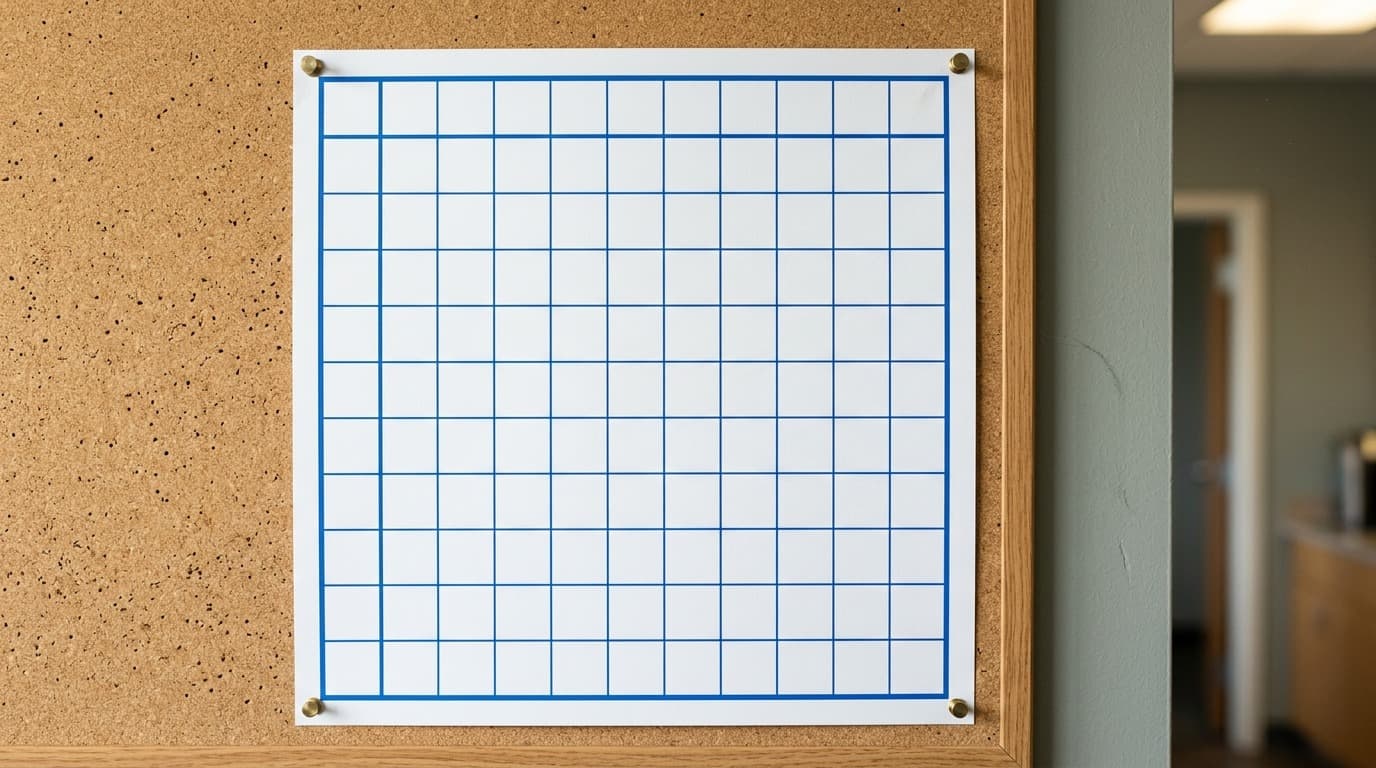
The grid itself is the easiest part to picture. Ten columns run across it and ten rows run down it, which makes 100 squares in total, and the two teams get one axis each. The convention most hosts follow puts the home team along the columns and the away team along the rows, so once the digits are drawn every square carries one digit for each team. A hundred squares is the standard and the most recognizable size, though hosts do run smaller boards, and our breakdown of every squares grid size covers the 25-square, 10-square and 4-square formats you might run into instead.
What makes the game work for a mixed room is that the outcome has nothing to do with football knowledge. You aren't predicting a winner, a margin or a total, and the digits arrive on your square by a random draw you have no say in. That's exactly why these boards fill up in offices and living rooms where half the people couldn't name a starting quarterback.
How Do You Get a Square in a Football Pool?
You get a square by claiming an empty one on the grid and paying the host whatever the board charges per square, either by writing your name into it on a printed sheet or by tapping it on an online board. You can claim as many as you like on most boards, and each one you take is a separate, independent chance at every prize the board pays out.
Price is entirely up to whoever is running it. According to our data on Super Bowl and NFL boards, the most common prices per square are $1, $2, $5 and $10, which tells you the range casual boards tend to live in, and a board raising money for a cause will often sit higher than a board built purely for a party. The number you pay is worth knowing before you claim anything, because it multiplies: ten squares at $5 each is a $50 commitment, not a $5 one.
The deadline matters more than the calendar does. Sign-ups on a lot of boards run right up to kickoff, and some hosts let latecomers in slightly past it, so there's no reliable rule about needing to join days ahead. The real cutoff is the number draw: once the host randomizes the digits, the board locks completely, with no new entries, no swapped squares and no changes to who holds what. That lock is what keeps the game fair, since every square only has an equal chance while the digits are still unknown.
Pay when you claim, or as close to it as your host allows. Boards stall because a handful of squares are spoken for but unpaid, and the digits can't be drawn until the grid is genuinely full, which holds up everyone waiting to find out what they're holding.
How Do the Numbers Get Assigned to Your Square?
The numbers get assigned by randomizing the digits 0 through 9 twice, once for the home team across the columns and once for the away team down the rows, after the board has completely sold out. Your square inherits whichever two digits happen to land on its column and its row, and until that draw happens your square carries no numbers at all.
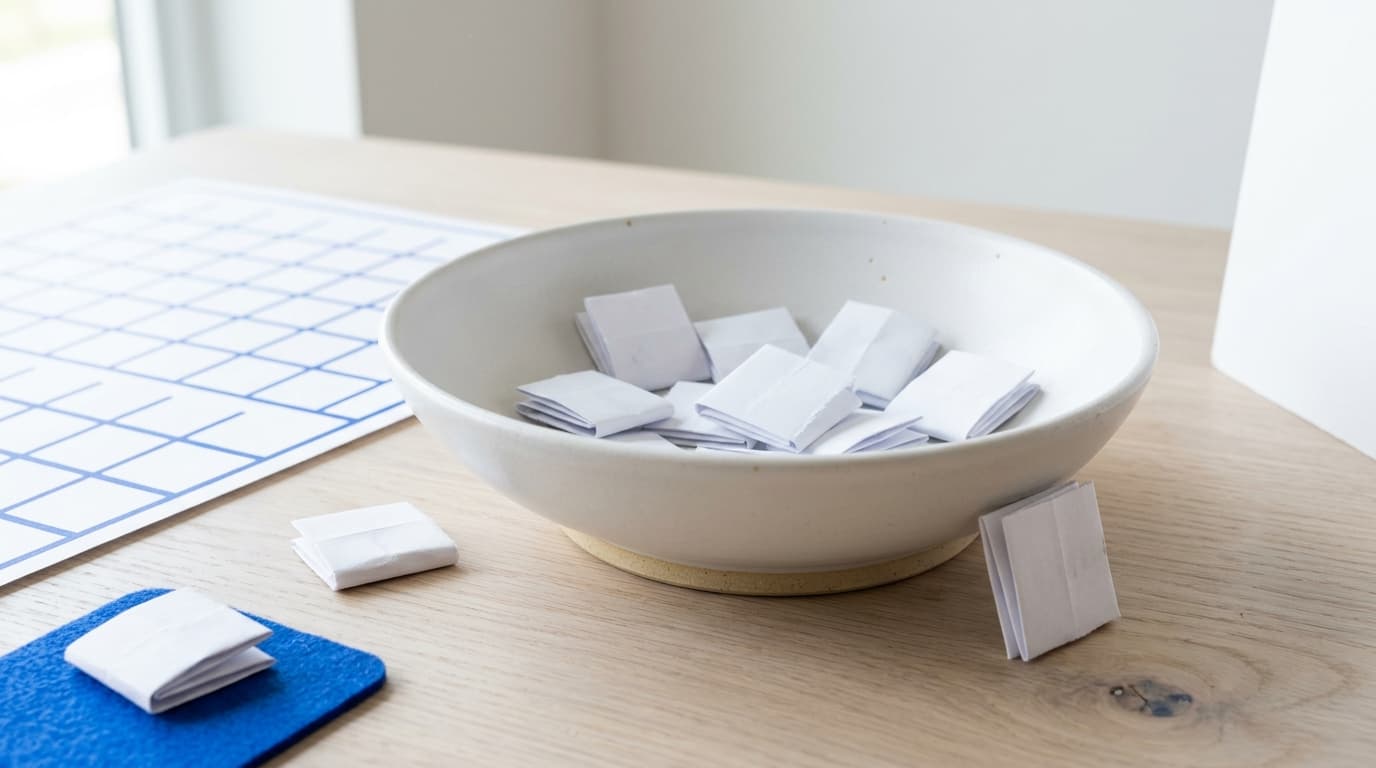
A traditional draw pulls ten folded slips out of a hat one at a time, writing each digit above a column, then repeats the whole thing for the rows. An online board does the same thing instantly when the host clicks to randomize, and our football squares number generator handles that draw on its own if your host is working from a printed grid.
This is the part players most often misunderstand, so it's worth being blunt about it. Nobody picks their digits, not the host, not the first person to buy in, not the person who bought forty squares. Some boards do let an early buyer or a top fundraiser choose their position on the grid before anyone else, but a position chosen before the draw is just a spot on a blank sheet, and it carries no advantage whatsoever over a square claimed an hour later. Anyone telling you they got good numbers by claiming early is describing luck rather than strategy.
Once the draw is done, take thirty seconds to write down what you actually hold. Knowing that you have a 7 for the home team against a 3 for the away team, rather than vaguely remembering you took two squares near the middle, is the difference between following the game and asking the host what your numbers were at halftime.
How Do You Know If Your Square Won?
You know your square won by taking the last digit of each team's score the moment a scoring period ends, then finding where those two digits cross on the grid. If the square sitting at that intersection is yours, you've won that period's prize, and everything before the last digit of each score is irrelevant to the board.
Run it through with real numbers. Say the home team leads 24 to 17 when the first half ends, which makes the home team's last digit a 4 and the away team's last digit a 7. The square holding a 4 for the home team and a 7 for the away team wins the halftime prize, and nothing else about that scoreline matters. A home score of 34 or 44 would read exactly the same way on the board, because a 4 is a 4 no matter how many points sit in front of it.
The order of the two digits is what trips up first-time players. Holding a 4 for the home team and a 7 for the away team is a completely different square from holding a 7 for the home team and a 4 for the away team, and only one of them wins on a 24 to 17 scoreline. Some boards soften that with the reverse score rule, which pays a smaller bonus to the square holding the same two digits flipped between the teams, so check whether your board uses it before assuming a near miss is worth anything.
Standard football boards check the score four times, at the end of the first quarter, at halftime, at the end of the third quarter and on the final score. That means four separate chances for your square across a single game, and the digits that win at one of those checkpoints have no bearing on the next one. A scoreline of 7 to 0 after a quarter and 24 to 17 at halftime pays two entirely different squares, and our football squares example follows one real Super Bowl LX board through all four scoring periods.
How Much Does a Winning Football Square Pay?
A winning football square pays a share of the prize pool that the host decides ahead of time, and the most common shape gives 20 percent to each of the first three quarters and 40 percent to the last prize on the final score. The prize pool itself is simply the price per square multiplied by 100 on a full board, so the size of any single prize follows directly from what everyone paid to get in.
Here's that split on a full 100-square board charging $5 a square, which collects $500. The percentages are the part worth remembering, since the dollar figures scale with whatever your own board charges.
| Scoring period | Prize | % of prize pool |
|---|---|---|
| End of the 1st quarter | $100 | 20% |
| Halftime | $100 | 20% |
| End of the 3rd quarter | $100 | 20% |
| Last prize (final score) | $200 | 40% |
Plenty of boards run differently, and none of it is wrong. Some pay evenly across all four quarters, some skip the mid-game checkpoints entirely and pay a single prize on the final score, and a fundraiser board usually holds back half of everything collected for the cause and splits the rest among the winners. Boards built around a cause work slightly differently on the money side, which our guide to running a squares fundraiser walks through properly.
As a player, the only thing you really need from your host is which structure the board is on, and you want that answer before the digits are randomized rather than after. A board paying once on the final score gives your square a single shot at the money, while a four-quarter board gives it four, and that changes what a square is worth to you at the same price.
Which Numbers Are the Best Squares to Have?
The strongest square across five seasons of real NFL results is a 7 for the home team against a 0 for the away team, which came up 424 times out of 5,785 scoring periods in our own dataset of 1,424 NFL games from 2021 through 2025, a win rate of 7.33 percent. A 0 against a 0 follows at 6.97 percent, then a 0 for the home team against a 7 for the away team at 5.96 percent, with a 2 against a 2 sitting dead last at two occurrences in the whole five years.
The reason is the arithmetic of football scoring rather than anything mysterious. Points arrive in sevens and threes, so scores pile up on digits reachable by adding those two together, and a 0 sits at the start of every game and stays there through every scoreless quarter. Digits like 2 and 5 need unusual combinations to appear at all, which is why they turn up so rarely. Here's how often each digit showed up on a team's score in that same dataset, both at the end of the first quarter and on the final score.
| Digit | Win rate, 1st quarter | Win rate, final score |
|---|---|---|
| 0 | 40.94% | 18.12% |
| 7 | 29.46% | 15.45% |
| 3 | 20.44% | 11.31% |
| 4 | 4.63% | 12.92% |
| 6 | 3.27% | 9.20% |
| 2 | 0.39% | 5.30% |
| 1 | 0.35% | 9.41% |
| 9 | 0.21% | 7.16% |
| 8 | 0.21% | 6.43% |
| 5 | 0.11% | 4.71% |
The gap between those two columns is the useful part, and almost nobody mentions it. First quarters are wildly concentrated, with a 0 landing on a team's score almost 41 percent of the time and a 5 landing there barely once in a thousand, because there simply hasn't been enough scoring yet to reach most digits. By the final whistle the spread has evened out considerably, with the best digit at 18.12 percent and the worst still managing 4.71 percent, so a square that looks hopeless after fifteen minutes has a far more reasonable shot at the biggest prize of the night. Our football squares odds tool lets you look up any pairing by scoring period against the same data.
None of this makes any square safe, and it's worth keeping the scale in mind. The single most common pairing in five years of NFL football still fails to win better than 92 times out of 100, so a good square is a better chance rather than a likely one. Since you can't choose your digits anyway, treat all of this as something that tells you how excited to get when the draw finishes, not as anything you can act on.
What Happens in Overtime, a Tie, or a Repeat Win?
Overtime normally just moves the last prize, so the final score that pays is whatever the scoreboard reads when the game genuinely ends rather than the score at the end of regulation. Ties get treated the same way, and a square that wins twice in the same game normally collects twice. All three come up less often than players expect, with overtime appearing in only 89 of those 1,424 games, or 6.25 percent of them.

What no board does is pay both. The last prize lands on one score or the other, either the true final score once overtime has settled the game or the score as regulation ended, and overtime never adds an extra prize on top of the fourth quarter. Paying on the true final score is the better practice and what hosts overwhelmingly default to, since it keeps the biggest prize on the score the game actually finished at rather than on a scoreline that got overtaken. The only genuine mistake is deciding which score counts after the game has already gone past sixty minutes. Our deep dive on football squares rules covers overtime, ties and the reverse score rule in full detail if you want the host's side of those decisions.
Repeat wins deserve a word too, because they generate more argument than anything else on a live board. When the same square lines up at two different scoring periods, the simplest and fairest thing is to pay it both times, since every square carried identical odds at every checkpoint from the moment the digits were drawn. A few hosts prefer redrawing a random square for the repeat prize, and that's a legitimate house rule as long as it was announced before the board sold out rather than invented at halftime.
How Do You Play Football Squares Online?
You play football squares online, on Play Squares or any shared digital board, by claiming your squares on screen instead of on a printed sheet, which means the grid, the payment record, the number draw and the winner checking all live in one place every player can open on their phone. The rules are identical to the paper version, and the difference is entirely in how much chasing anybody has to do.
Play Squares randomizes the digits the moment the host draws them, keeps one central record of who claimed which square and who has paid, and follows the game score as it happens rather than only once a quarter officially closes. That live tracking shows the pending winner for the quarter in progress, meaning the square currently on track to win if the score holds exactly where it stands, alongside the winners already settled.
For a player, that removes the part of squares nobody enjoys. Nobody has to message the host to ask whether their square won, what the score was at the end of the third quarter, or which digits they were even holding, because one central online board answers all of it at a glance. It saves the host a stack of the same three questions and makes the game more fun to follow, since everyone can watch their own square go live or die in real time instead of waiting on a text back. If you'd rather run one yourself, our NFL squares page and the full guide to hosting a football squares pool cover the host's side of everything above, and our page on playing football squares online walks through what the board does while the game is still being played.
Frequently Asked Questions
How do you play football squares if you know nothing about football?
How do you tell if you won a square in football?
Can you pick which numbers you get in football squares?
How are football squares paid out?
What are the best numbers to have in football squares?
What happens to football squares in overtime?
Can the same person win a football squares board twice?
Ready to Run Your Own Board?
Play Squares handles the grid, the number draw, payment tracking and live quarter-by-quarter scoring, so every player can check their own square instead of asking you.