How Many Squares Are in a Football Pool? (The Most Common Grid Sizes Explained)
Squares School9 min read · July 22, 2026
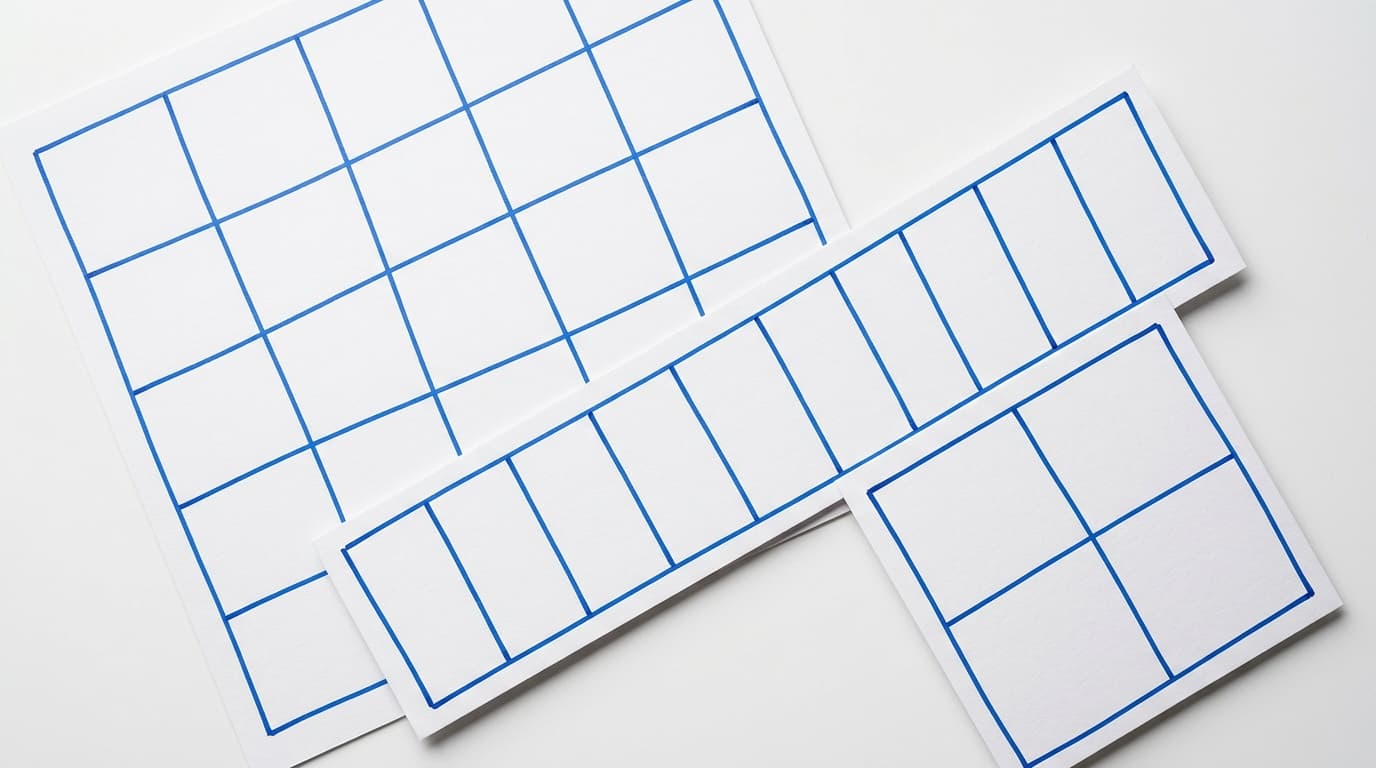
A football squares pool can technically be built at almost any size a host wants, but a handful of formats show up again and again in the real world: a full 10 by 10 grid of 100 squares, a 5 by 5 grid of 25 squares, a 10-square score-sum pool, and a small 2 by 2 grid of just 4 squares. Which size is right for you comes down to the experience you're going for: smaller grids need fewer squares to sell, which makes them the better call for a pool with fewer players, like a lower-hyped game that just doesn't pull the same interest as a marquee matchup.
Most pages on this topic stop at the 100-square version and call it a day, which works fine for a full office pool or a packed Super Bowl party but leaves you stuck if your group is six coworkers or a family of twelve gathered for a Sunday game. This piece walks through every real grid size hosts actually use, how many people each one comfortably fits, what to charge per square once the grid gets smaller, and how the payout math shifts once you're not working with a full 100-box board.
What Sizes Can a Football Squares Grid Actually Be?
While you can build a grid of nearly any size and configuration, the most common options are 100, 25, or 4 squares using the row-and-column matching described below, or a 10-square score-sum pool that works differently, based on the combined score instead of a grid intersection. Here's exactly how each one works.
The 10 by 10 board is the version almost everyone pictures first, and it earns that reputation honestly. Each of the ten digits, zero through nine, gets its own row and its own column, so all 100 boxes are unique and nothing needs to be shared or paired up. It's the easiest version to explain to a group that has never played before, which is exactly why it shows up as the default on nearly every squares pool page you'll find.
| 0 | 1 | 2 | 3 | 4 | 5 | 6 | 7 | 8 | 9 | |
|---|---|---|---|---|---|---|---|---|---|---|
| 0 | ||||||||||
| 1 | ||||||||||
| 2 | ||||||||||
| 3 | ||||||||||
| 4 | ||||||||||
| 5 | ||||||||||
| 6 | ||||||||||
| 7 | • | |||||||||
| 8 | ||||||||||
| 9 |
Every row and column gets its own single digit, so one square maps to exactly one last-digit combination. The highlighted square only wins on a 7-3 result, nothing else.
A 5 by 5 board shrinks that same idea down to 25 boxes by pairing digits instead of giving each one its own line. Here is how the pairing actually happens: all ten digits, zero through nine, get shuffled into a random order along each axis, the same randomization that happens on a full 100-square board. Because a 5 by 5 board only has five rows and five columns to work with, each row and column gets two digits instead of one. Every possible last-digit combination still lands somewhere on the board, the digits are just grouped two at a time per axis instead of standing alone. That also means that each square can win on more than one final score, since each square represents 4 pairs of number combinations.
Say the score sits at 17 to 13 at the half, and on this particular board the shuffle happened to land 2 and 7 together on one row and 3 and 8 together on one column. The last digit of 17 is a 7, which falls under that 2-and-7 row, and the last digit of 13 is a 3, which falls under that 3-and-8 column. Whoever holds the box where that row crosses that column wins the half, exactly the same lookup you'd do on a full 100-square grid, just with five lines to scan instead of ten.
| 0 · 6 | 1 · 9 | 3 · 8 | 2 · 5 | 4 · 7 | |
|---|---|---|---|---|---|
| 4 · 9 | |||||
| 2 · 7 | • | ||||
| 0 · 3 | |||||
| 1 · 6 | |||||
| 5 · 8 |
The highlighted square sits where the 2-and-7 row crosses the 3-and-8 column. It wins on any of four last-digit combinations: 2-3, 2-8, 7-3, or 7-8, one square covering four times the ground of a square on the full 100-square grid.
The 10-square format works completely differently from the sizes above: it's a score-sum pool, not a row-and-column grid at all. Each of the ten squares gets a single digit, zero through nine, and instead of matching two separate digits, the winning square is whichever digit matches the last digit of the combined score, both teams added together. Take that same 17 to 13 score from before: add those up and you get 30, so the square marked "0" wins. It's not necessarily the most familiar format, since fewer hosts know about it, but it's the simplest to understand once you do: there's only one number to check per square instead of two, and plenty of different final scores can land on that same last digit, that's normal, not a mistake, since adding two numbers together only ever leaves ten possible last-digit outcomes to begin with.
| 0 | 1 | 2 | 3 | 4 | 5 | 6 | 7 | 8 | 9 |
Ten squares, one digit each, no rows or columns to cross. A 17-13 score sums to 30, so the square marked 0 wins, along with any other final score whose combined total also ends in 0.
A 2 by 2 grid takes the same shuffle-then-split idea to its smallest useful size: four boxes total, with the ten digits split into two groups of five per axis, whichever five digits land together after the shuffle. It's the smallest true grid you'll see, and it still technically covers every possible last-digit outcome, just in much broader buckets, so the same rule applies here even more so: one square wins across a wide range of final scores, not just one.
| 0 · 6 · 1 · 9 · 3 | 8 · 2 · 5 · 4 · 7 | |
|---|---|---|
| 4 · 9 · 2 · 7 · 0 | • | |
| 3 · 8 · 1 · 6 · 5 |
Each axis is split into just two broad groups of five digits. The highlighted square covers every combination between its row's five digits and its column's five digits, 25 last-digit combinations in one square, the broadest coverage of any of the four sizes.
Which Grid Size Fits Your Group?
The setup work is basically the same no matter which size you run, that part doesn't change. What actually changes between sizes is how many squares need to get claimed before the board is full, and how much ground each individual square covers. A 25-square grid's squares each cover four pairs of numbers instead of one, since two digits get grouped together on each row and each column, so fewer squares need to sell, but each buyer is covering more ground with the one square they hold.
| Grid size | Squares to sell | Number pairs per square |
|---|---|---|
| 100 (10 by 10) | 100 | 1 |
| 25 (5 by 5) | 25 | 4 |
| 10 (score-sum) | 10 | 10 |
| 4 (2 by 2) | 4 | 25 |
Squares times pairs per square always works out to 100, the total number of possible last-digit combinations. A smaller grid just packs more of those combinations into each square.
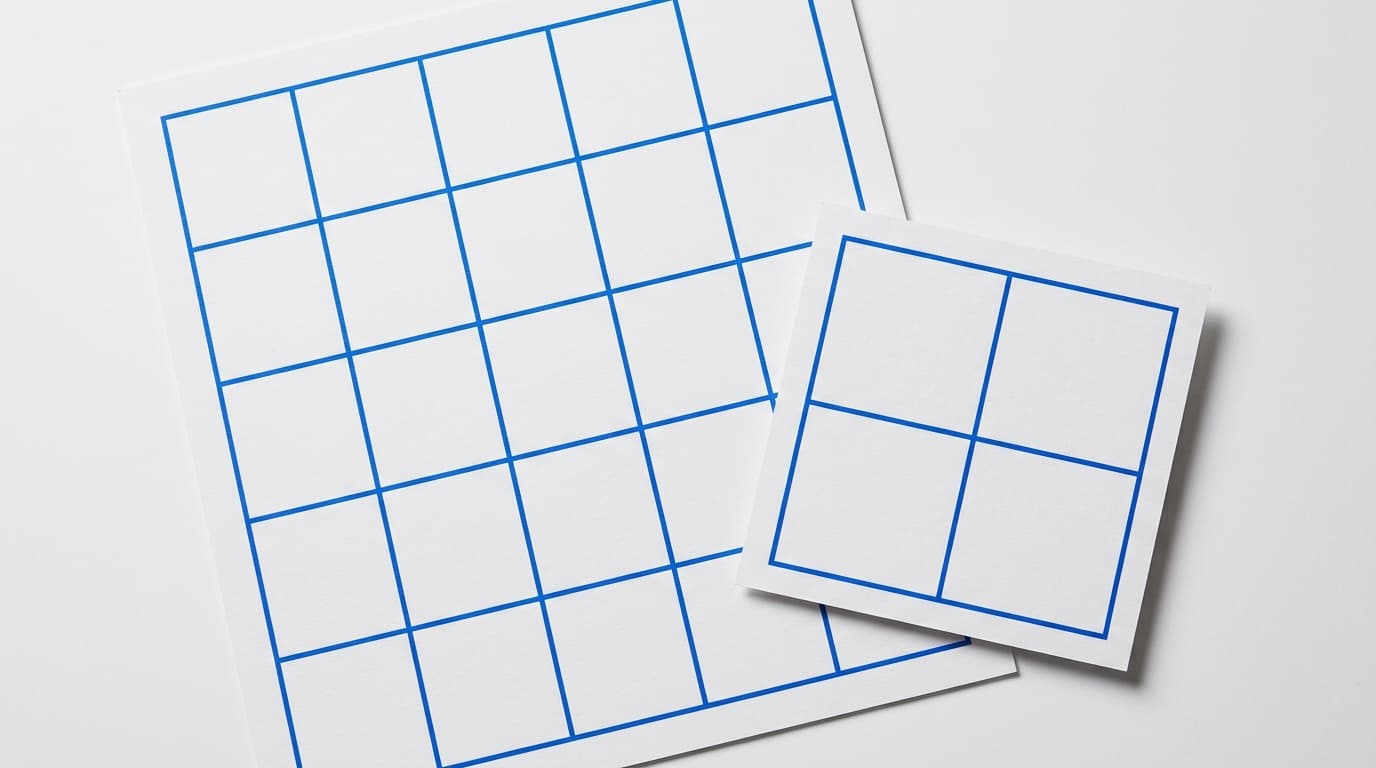
That math is also why group size and grid size aren't strictly locked together. A larger group usually leans toward more squares, since each player can comfortably choose 1 or more squares and still leave room for others to claim more if they want, without running out of squares for everyone. A smaller group can still run a 100-square board, but each player will need to claim more squares in order to fill the board. There's no wrong headcount for any grid size, it really comes down to whether the players in your group want to claim many squares or have them consolidated down to fewer squares.
A 25-square grid earns its keep whenever you'd rather sell fewer squares overall and still cover the full range of outcomes, keeping the same row-and-column lookup just with fewer lines to scan, and our 25 square football pool page shows that board set up for any game. The 10-square score-sum pool goes a step further: there's no grid lookup at all, just one number to add up and check, which makes it the fastest of all four sizes to explain to a new player. Either one works particularly well during the regular season, when a group might run a fresh board nearly every week rather than saving all the excitement for one Sunday in February.
Running the same size every week also simplifies things if your group repeats the pool across a full regular season. A 10-square or 25-square board has far fewer squares to sell than a full 100-square grid, which makes it quicker to fill fresh each week without needing to round up as many buyers. Matching the grid size to how many squares you can realistically get claimed for a given game, rather than defaulting to the biggest version out of habit, is what keeps a weekly pool sustainable instead of turning into a chore by October.
For a group that just wants quick action without needing to sell many squares, the 4-box grid or the 10-square score-sum pool keeps things proportional. There are only a handful of squares to claim, and the whole thing can be set up and filled in the time it takes to order a pizza.
How Much Should You Charge Per Square at Each Size?
Square price should scale with grid size and your prize goal, not stay fixed while the number of boxes shrinks. A $5 square on a 100-box grid raises $500 total, while that same $5 price on a 10-box grid raises just $50, so a smaller grid usually calls for a higher per-square price if you want a similar-sized prize pool at the end.
According to our data across real Super Bowl and NFL squares pools, the most common prices, in order, are $5, $10, $1, and $2 a square. Those numbers hold up well for a standard 100-square board with a casual group, and they're a reasonable starting point for a 25-square grid too, since the pool is still large enough that a low price per box doesn't leave you with a tiny prize pool.
Here's how those same starting prices play out once the grid shrinks, just to show the scale rather than tell you what to charge:
| Grid size | Squares | $5/square prize pool | $10/square prize pool |
|---|---|---|---|
| 100 (10 by 10) | 100 | $500 | $1,000 |
| 25 (5 by 5) | 25 | $125 | $250 |
| 10 (score-sum) | 10 | $50 | $100 |
| 4 (2 by 2) | 4 | $20 | $40 |
Once you're down to a 10-box or 4-box grid, plenty of hosts charge well above that $1 to $10 range, sometimes $20 or $50 a square, specifically because a small, tight-knit group can absorb a higher price and still walk away with a meaningful prize pool. There's no fixed rule here beyond working backward from what your specific group is comfortable paying and what kind of prize makes the game worth watching.
That same logic works in reverse too. If your group specifically wants a low-stakes, low-cost pool, a 100-square grid at $1 a square keeps the buy-in tiny while still building a $100 prize pool, since the extra boxes make up for the lower price. Grid size and square price are really two dials you're turning together, not one fixed number copied from somebody else's pool. Once you know what the board will collect, our breakdown of football squares payout structures walks through how to split it across the scoring periods.
How Do Payouts Change With a Smaller Grid?
Payouts on a smaller grid work the same basic way as a 100-box grid, matching digits at the end of a quarter or the final score, they just cover fewer possible outcomes, so each box has better odds and the prize per quarter usually needs to shrink to match a smaller total prize pool.

On a full 100-square board, the common structure pays out four times, once at the end of each quarter, with the final score worth the most. The Ultimate Guide to Hosting a Football Squares Pool walks through that full structure and the five-step process behind it in more detail, and nearly all of it carries over directly to smaller grids.
The real difference in smaller formats is your chance to win once you're in a pool. On the full 100-square grid, each square covers exactly one last-digit combination out of 100 possible outcomes, roughly a 1% chance per square. A 25-square board covers four combinations per square instead of one, since two digits get paired per row and per column, which works out to roughly a 4% chance per square, 4x better odds than the 100-square version. The 10-square score-sum board lands in that same range from a different direction: since ten different score combinations can add up to any given last digit, each of its squares also covers roughly a 10% chance to win. The 4-square grid goes furthest of all, at roughly a 25% chance per square. That better hit rate on the smaller formats is exactly why they can still feel exciting even with a smaller total prize pool.
Take a 25-square grid charging $10 a square, a $250 total prize pool. Split evenly across four quarters the way a 100-square board often is, that comes to $62.50 a quarter, an awkward number that undersells the moment. Plenty of hosts instead pay $50 at the first quarter, $50 at halftime, $50 at the third quarter, and $100 on the final score, rounder numbers that still add up to the full $250 while still weighting the ending appropriately heavier.
Because individual boxes win more often on a paired grid or the score-sum board, plenty of hosts simplify the payout schedule too, dropping from four payouts down to two, say halftime and final only, since splitting a modest prize pool four ways can leave each individual prize feeling thin. Keeping two meaningful payouts instead of four small ones is a simple fix that keeps the game feeling worth playing on a smaller board.
How Do You Decide Which Size to Use?
Decide based on how many squares you actually want to sell and how your group likes to play, rather than defaulting to 100 squares just because it's the version everyone already recognizes. If everyone wants a single square of their own, size the grid to roughly match how many people are buying in. If some people are happy claiming a few squares each, a bigger grid works fine even for a smaller group.
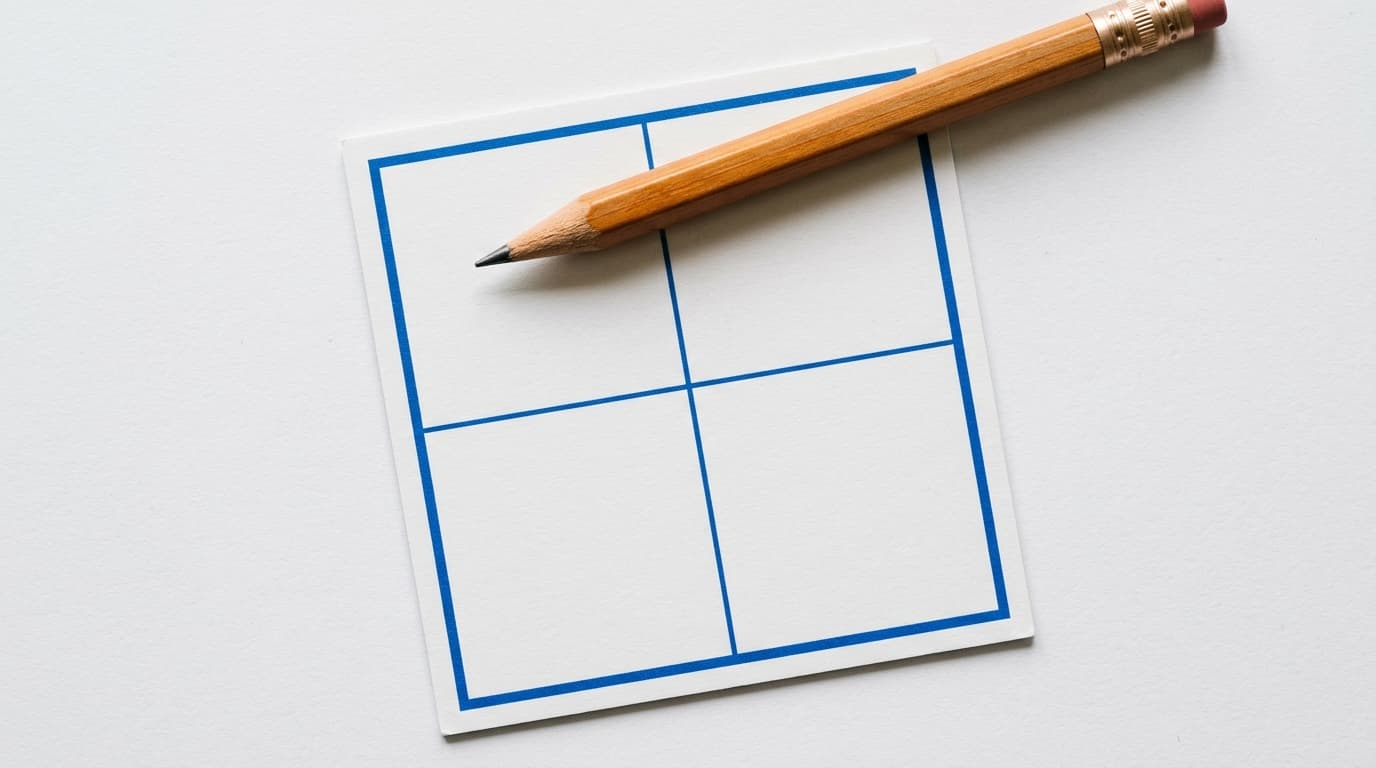
A full 100-square grid works for any size group, there's no rule that says one person can only hold one square. What changes with a smaller group is how many squares each person ends up claiming: fewer buyers just means each person picks up several squares instead of one, which is a completely normal way to fill a 100-square board.
A 25-square or 10-square grid fits situations where you'd rather sell fewer squares overall, a fantasy football league's side pool, a family get-together, or a weekly regular-season pool where you don't want to chase down a hundred buyers every Sunday. These sizes lean smaller because there are simply fewer squares that need to find a buyer, not because of any hard headcount rule.
A 4-square grid can backfire if you have more than 4 players wanting their own square, since only four total squares are available and most interested buyers get shut out entirely once it sells out, which defeats the point of running a pool everyone can join. When you're not sure how many people want in, size up rather than down.
For a gathering that just wants a handful of squares and nothing to explain, skip the grid pairing altogether and run the score-sum pool instead. One digit each, winner takes whatever's collected once the combined score lands on that digit. It's the fastest format to explain and the fastest to fill, and it works just as well for regular-season NFL games as it does for the postseason.
Whichever size fits your group, Play Squares builds any of these formats, the full 100-square board, the 25-square grid, the 10-square score-sum pool, or the small 4-square grid, in a couple of minutes, assigns the numbers automatically once it's full, and tracks the score for you so nobody's doing quarter-by-quarter math by hand. If you're running this year's board on paper, our football squares template prints a filled-in 100-square or 25-square sheet, and our football squares number generator takes care of the draw on its own. If your pool is centered on one marquee game rather than a weekly grind, our Super Bowl squares page covers the single-game version of the same idea.
Frequently Asked Questions
How many squares can a football pool have besides the standard 100?
What's the smallest football squares pool you can run?
Do smaller squares grids still cover all ten digits?
Is it fair that some digits get paired together on a smaller grid?
How many people do you need to fill a 100-square football pool?
Can you use a different grid size for every NFL game during the regular season?
Do you need different software to run a smaller squares grid?
What happens if a smaller grid doesn't sell out before kickoff?
Ready to Build Your Board?
Play Squares handles any grid size, 100, 25, 10, or 4-square, with automatic number assignment, payment tracking, and live scoring built in.