Football Squares Rules: Overtime, Ties, and the Reverse Score Rule Explained
Squares School13 min read · July 27, 2026
Football squares rules come down to one simple idea once you strip away the confusion: a random pair of digits, zero through nine, gets assigned to each row and column of the grid, and whoever holds the square where the actual score's last digits cross wins that round's prize. Where hosts and players actually get tripped up is everywhere else: what counts as the final score once overtime gets involved, whether a tied game changes anything, the optional reverse score rule some pools run (also called reverse digits), and what it means when the same square keeps winning.
Play Squares runs football squares pools of every size, and the questions below are the ones hosts actually ask mid-game, not just what to explain before kickoff. If you still need the basics on setting up a board, from picking a grid size to collecting payment, the Ultimate Guide to Hosting a Football Squares Pool covers that whole process step by step. This piece assumes your board is already filled and focuses squarely on the rules that decide who actually wins.
None of these rules are complicated on their own, but they rarely show up together in one place. Most pages on this topic either stop at the basic setup or focus only on the Super Bowl, leaving a regular host with nowhere to check what actually happens once a game gets weird, whether that's overtime, a tie, or a square that just keeps winning.
How Does a Football Squares Grid Actually Work?
A standard football squares grid is a 10 by 10 board, 100 squares total, with one team's name running across the top and the other team's name running down the side. Once every square is claimed, the numbers zero through nine get randomized along each edge, one full set of ten digits per team, so every square ends up representing exactly one specific last-digit combination.

That number randomization needs to happen after the board fills, never before, since assigning the digits early would let whoever claims a square last pick knowing which numbers it already covers, which defeats the entire point of the game. Ideally, wait until the board is fully paid for too, not just fully claimed, so the numbers reflect who actually followed through. Most hosts do the random assignment right before kickoff, in front of the group if it's an in-person pool, or automatically the moment the last square sells and is paid for if you're running the board online for a weekly NFL pool that repeats all season.
From there, the last digit of each team's score at whatever scoring periods the host picked, usually the end of each quarter, decides who wins, and that part rarely confuses anyone. Two details are worth locking down early, before the board even fills: exactly when the numbers get randomized, covered just above, and how a tied score or an overtime period changes the last prize, which is genuinely where most of the confusion lives and is covered in full just below.
One thing worth settling up front: once that number randomization happens, nobody, including the host, gets to move it. A grid where the host can quietly reassign digits after seeing who claimed which square isn't really a squares pool anymore — it's the host giving certain people an unfair advantage and ruining the integrity of the pool. The randomness only means anything if it happens exactly once, after every square is claimed and paid for, and never gets touched again for the rest of the game.
How Do You Determine the Winner Each Quarter?
The winning square for any given scoring period is whichever one sits at the intersection of the last digit of each team's current score, checked at the end of that quarter, at halftime, and again once the game is final. Walking through one complete game from kickoff to the final whistle makes the rest of this article's edge cases much easier to follow, so here's a full example.
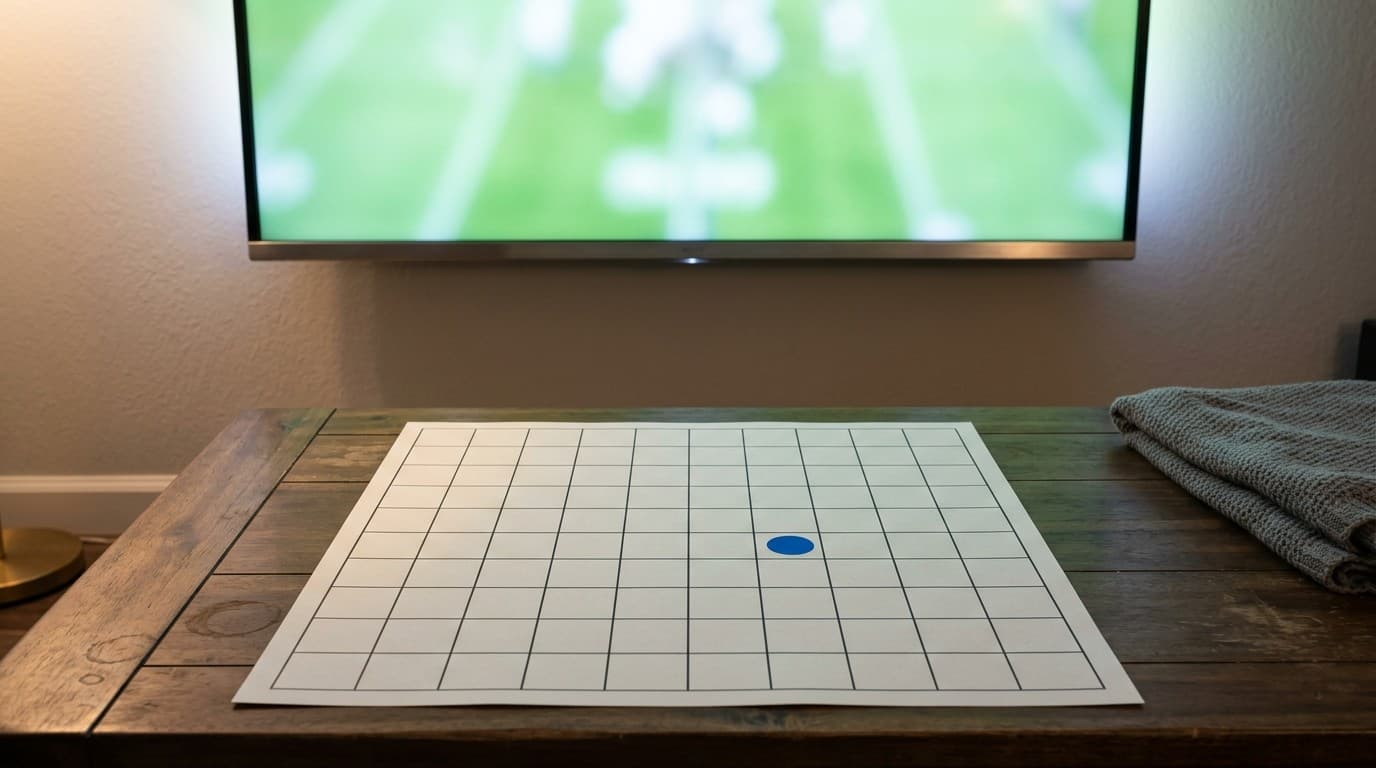
Say the home team leads 7 to 3 at the end of the first quarter. The last digit of 7 is 7, and the last digit of 3 is 3, so whoever holds the square where the home team's 7 row crosses the away team's 3 column wins the first prize. By halftime the score has moved to 14 to 10, last digits 4 and 0, a different square entirely. The third quarter ends with the home team back on top 17 to 13, and here's where it gets interesting: the last digits land on 7 and 3 again, the exact same square that already won at the end of the first quarter. Regulation ends with the score tied at 20 to 20, last digits 0 and 0, sending the game to overtime, which the next section covers in full. Once overtime wraps up and the home team pulls ahead 23 to 20, the last digits land on 3 and 0, deciding the final prize.
| Scoring Period | Home score | Away score | Winning square |
|---|---|---|---|
| End of 1st quarter | 7 | 3 | 7-3 |
| Halftime | 14 | 10 | 4-0 |
| End of 3rd quarter | 17 | 13 | 7-3 |
| End of regulation | 20 | 20 | 0-0 (tied) |
| Final, after overtime | 23 | 20 | 3-0 |
The first quarter, halftime, and third quarter each pay out their own prize based on whatever the score was the moment that period ended, and that part is straightforward. The one decision that actually needs settling before kickoff is what happens at the end of regulation: does your last prize go to the score at the end of the fourth quarter, or to the actual final score once overtime (if there is any) wraps up? Nearly every pool picks just one of those two, not both, since overtime is rare enough in football that splitting the last prize into two separate payouts mostly just makes the pool more complicated and each individual prize smaller. The section below covers that choice in full.
What's the Rule When the Game Goes to Overtime or Ends in a Tie?
When a regular-season NFL game is still tied after regulation, it gets one 10-minute overtime period, and if nobody scores enough to break the tie in that time, the final score simply stays tied, since regular-season games are allowed to end that way. Playoff games work differently: ties aren't allowed, so the game keeps playing full 15-minute overtime periods, as many as it takes, until somebody wins.
A tie doesn't need its own special rule. Whatever the score is when the game officially ends, tied or not, the square that matches those last digits wins the final prize, exactly the same as it would for any other score.

For your squares pool, decide whether the last prize goes to whatever the score is at the end of regulation or whatever it is once overtime, if there is any, finishes. It doesn't need to be announced out loud, but it does need to be decided and communicated to the group before kickoff. Using the continuous game from the section above, the score sitting at 20 to 20 at the end of regulation would have won the last prize under a regulation-only rule. Once that overtime period wrapped up and the home team won 23 to 20, the square marked 3 and 0 becomes the winner instead under an overtime-inclusive rule.
Almost every pool pays out only one of the two, not both, since overtime is rare enough in football that splitting the last prize in two mostly just shrinks each individual payout and adds a rule most groups never end up needing. Our recommendation is to pay the final score, overtime included: it keeps everyone watching, and rooting, all the way to the actual end of the game instead of tuning out once regulation is over, which makes the finish that much more climactic. Play Squares defaults to final score for exactly that reason, though you can always add a separate bonus prize for the end-of-regulation score on top if your group wants one. The only rule that really matters is settling on end-of-Q4 or final score before kickoff, so nobody's deciding it after the fact once everyone already knows whose square would benefit.
What's the Reverse Score Rule, and How Does It Change the Odds?
The reverse score rule (sometimes called reverse digits) is an optional add-on where the square with the two winning digits flipped also wins a smaller prize alongside the actual winning square. It's a nice, easy way to spread more winners through the pool instead of paying out just one square per scoring period.
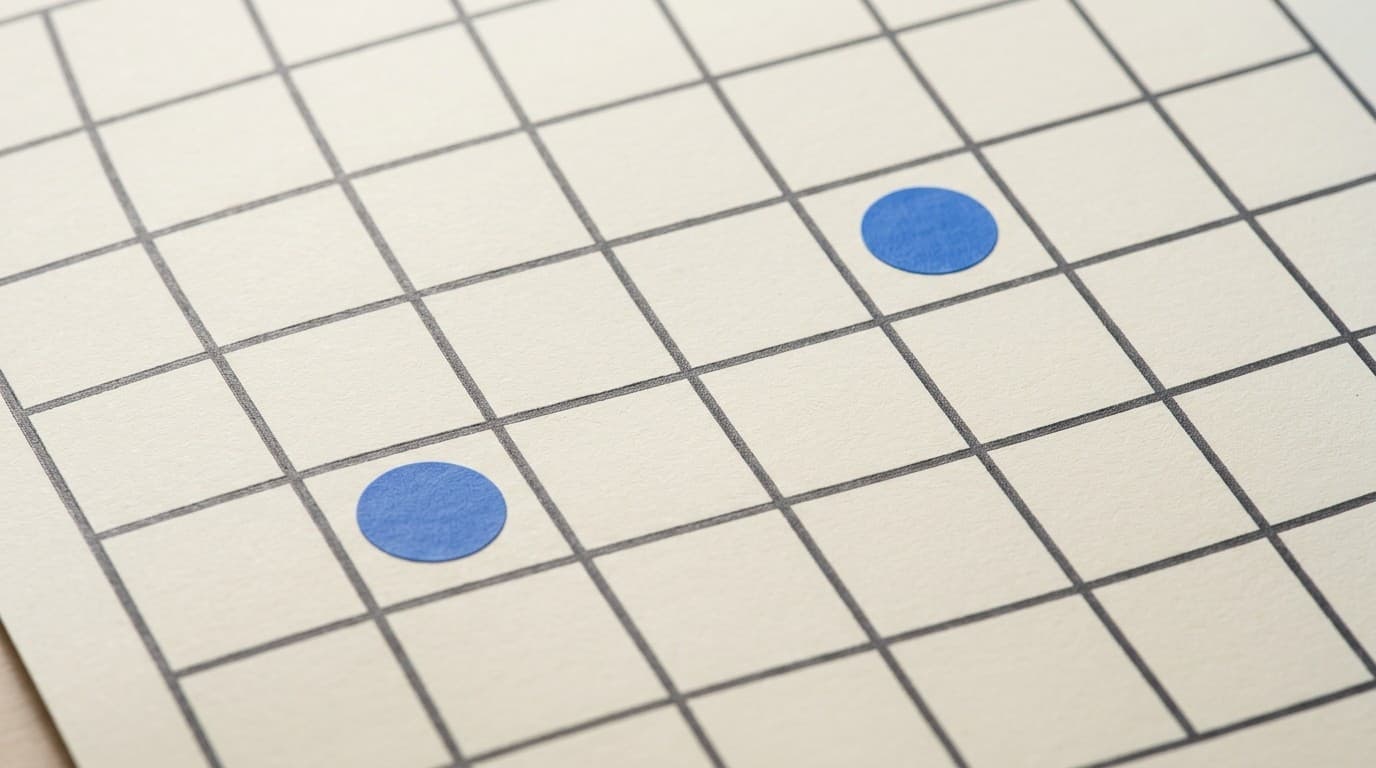
Take the final score from the running example above, home team 23, away team 20, last digits 3 and 0. Under a standard rule, only the square marked 3 and 0 wins the final prize. Add the reverse score rule and the square marked 0 and 3, the same two digits with the teams swapped, also wins, usually for a smaller amount than the main prize.
It works the same way at every scoring period, not just the final score. Back at the end of the first quarter in the running example, the home team led 7 to 3, so the square marked 7 and 3 won under the standard rule. Add the reverse score rule and the square marked 3 and 7 also wins a smaller prize for that same quarter, even though the actual score never once favored the away team by that margin.
Here's the part that actually changes your odds, not just your payout structure. Every square on the board except the ten where both digits match, 0 and 0, 1 and 1, all the way to 9 and 9, gets roughly double its normal chance of winning any given scoring period once you add the reverse score rule, since it now wins on two different final-digit combinations instead of just one. The ten matching-digit squares work a little differently: since their reverse is themselves, the rule doesn't give them a second, different winning combination the way it does everyone else, so their odds of winning any given scoring period don't improve. But when one of them does hit, it collects both the standard prize and the reverse prize at once, since the same square satisfies both, so it's a bigger single payout rather than better odds.
The tradeoff is that your total prize pool gets split into more, smaller prizes instead of fewer, bigger ones, so the reverse score rule tends to suit a bigger prize pool or a group that likes seeing more winners over the course of the game more than it suits a small pool where every prize needs to feel substantial, and it's entirely optional besides. Plenty of hosts run football squares for years without ever adding it, and the game works perfectly well either way.
Is It a Problem If the Same Square Wins More Than Once?
It's not a problem at all, and it happens more often than new hosts expect. Since the digits get randomized once at the start of the game and stay fixed for the rest of it, any score that produces the same pair of last digits at two different scoring periods hands the same square another prize, exactly like the 7 and 3 square did at the end of both the first and third quarters in the running example above.

That outcome isn't a flaw in the system. Each scoring period is its own independent check against the same fixed grid, and a square winning twice, or even three or four times across a full game, is just as fair as any single square winning only once.
It also isn't the same question as one person owning several different squares on the board, which is completely normal and expected on its own. A repeat winner just means one of those squares, or even the only square a smaller buyer claimed, happened to line up with the score more than once. Nothing about either situation says the board was rigged or unfair, since the numbers were locked in before anyone knew how the game would go.
If it bothers your group anyway, the fix isn't to change the rule mid-game, since that only helps whoever benefits from the change. Decide before kickoff which version you're using, and stick with it once the game starts. The large majority of squares pools simply let repeat wins happen as-is, and that's the recommendation here too, since it's the simplest and fairest option. A smaller group of advanced hosts use one of two other options in specific situations: moving a repeat-win prize to a randomly picked square instead, or adding a pre-agreed offset (plus seven is a common choice) to the digits of a square that wins twice in a row, so a different square collects the prize if that same result repeats, until the score changes enough on its own that the original numbers are back in play.
What Changes If You're Not Running the Standard 100-Square Grid?
Every rule covered above works exactly the same way on a smaller grid. The only difference is how many digits get grouped into each square. A 25-square board pairs two digits per row and per column instead of giving each digit its own line, so a single square can win on any of four different last-digit combinations instead of just one, and the 10-square score-sum format skips the grid entirely, matching one combined digit instead of two separate ones.
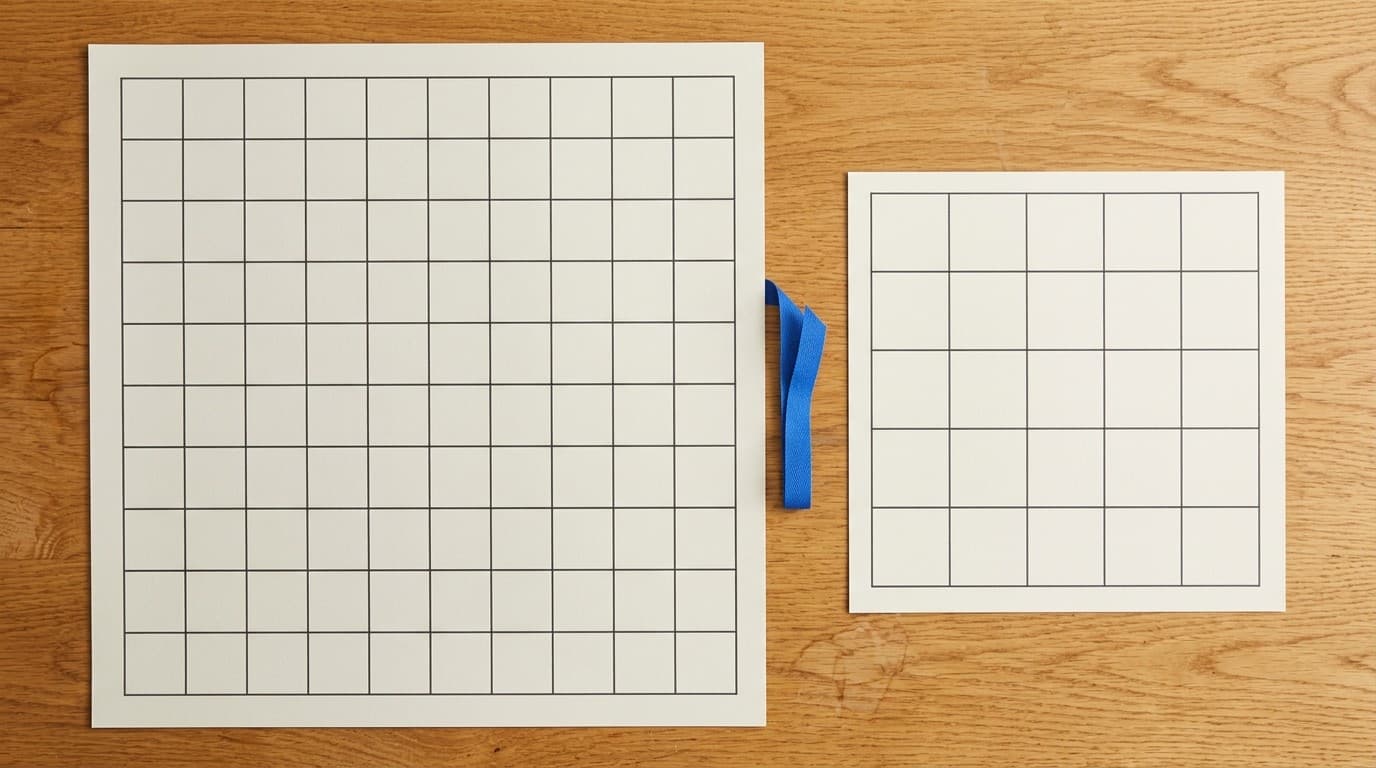
How Many Squares Are in a Football Pool? breaks down exactly how the 25-square, 10-square, and 4-square versions work and which one fits a smaller group, so this piece won't repeat that math here. The overtime rule, the reverse score rule, and the repeat-winner question above all apply the same way no matter which size board you're running.
That consistency matters most for a host running the same format week after week, whether that's a casual office pool that repeats every Sunday or a fundraiser board built around a single marquee game. Once your group has picked a grid size and settled on how to handle overtime and repeat winners, you're not rewriting the rules from scratch for the next game, you're just plugging a new score into rules everyone already understands.
Frequently Asked Questions
Do you need special software to track a football squares pool's rules?
What happens if a square doesn't sell before kickoff?
Does every square really have an equal chance to win?
Do NFL playoff games follow the same overtime rule as the regular season?
Ready to Put These Rules on Autopilot?
Play Squares assigns your numbers randomly, tracks every quarter's score, and calculates the winning square automatically, overtime and the reverse score rule included, so nobody's doing the math by hand.