How to Run a Super Bowl Squares Fundraiser
Squares School12 min read · July 23, 2026
A Super Bowl squares fundraiser works by selling numbered squares on a single 10 by 10 grid, assigning the digits 0 through 9 to each row and column at random once every square is sold, and paying out a prize to whoever owns the square that matches the last digit of each team's score at the end of each quarter. Set aside a portion of what you collect for your cause before you work out the prize money, and you have a fundraiser that gives every single person in the room a reason to watch the whole game, not just the people who actually follow football.
That part is straightforward enough on its own, but what actually takes planning is everything underneath it: how to price your squares for your specific group and goal, how to split a single prize pool across four quarters so the money still feels weighted toward the final score, how to collect and track payments centrally without losing track of who paid, and how to keep the whole thing fun for everyone playing and safe and simple to run from open to payout.
This guide covers all of it, written specifically for someone raising money around the Super Bowl rather than just running a squares pool for fun. You will walk away with a real pricing method tied to your own goal, a concrete quarter by quarter payout example you can copy directly, and a straight answer to the question every organizer eventually asks about whether any of this is actually allowed.
What Is a Super Bowl Squares Fundraiser?
A Super Bowl squares fundraiser is a squares pool run specifically to raise money for a cause instead of purely for fun, using the Super Bowl as the single event that decides the winners. Youth sports teams and charities run these most often. A youth team already has a group of people around it who care about sports, so a squares board gives that group an easy way to turn something they already enjoy into money for the team. Someone raising money for a cause or a charity treats the Super Bowl as just another opportunity on the calendar to do that, since it lands during one of the biggest television audiences in sports and gives supporters an easy, low-pressure way to give. Workplaces reach for the same format often too, while schools and community groups turn to it less frequently.
The fundraiser version works the same way as a normal squares pool, with one difference in mindset: a portion of every dollar collected goes to the cause before anything gets paid out to winners. That single decision, how much stays with the cause versus how much becomes prize money, shapes almost every other choice you will make about pricing and payouts, and it is the main thing separating a fundraiser board from a squares pool your office runs purely for bragging rights.
It also tends to work better as a fundraiser than a squares pool run purely for fun, since participants already expect part of their money to go toward something bigger than winning cash. That framing matters both for how you price the board and for staying comfortable with the compliance side, which a later section covers directly, and it is precisely why so many youth teams and local charities reach for this format over a raffle or a bake sale during Super Bowl week. If you're still weighing those alternatives, our football fundraiser ideas rank squares against the other usual options by how much work each one takes.
Everything here works whether you run the board on paper or set it up digitally with Play Squares. For paper, our Super Bowl squares fundraiser template prints a sheet with your cause and your own line already on it. If your group would rather skip the printed grid and handwritten names, our Super Bowl squares page covers the digital version, including automatic number assignment and live score tracking through all four quarters, and our guide to running Super Bowl squares online walks through setting that board up step by step.
The most common groups running these fundraisers are youth sports teams covering travel costs and gear for a season, and people raising money for a charity or a cause who use the Super Bowl as their moment to do it. Workplaces run them often too, while schools and community groups reach for a Super Bowl squares fundraiser less frequently. A youth team is already organized around sports, so a squares board fits the audience it already has without any extra explaining, and someone fundraising for a charity treats the Super Bowl as just another opportunity to raise money, one that happens to land during one of the biggest television audiences of the year.
If your group wants the same idea spread across a longer stretch of games instead of one single event, our March Madness squares fundraiser guide covers the tournament version, including how the payout structure changes when a single board has to cover six rounds instead of four quarters.
And if your group would rather not wait for February to raise money, the same format runs on any game on the schedule. Our football squares fundraiser page covers the regular-season version, where a team or a cause can put a board up week after week instead of once a year.
How Do Super Bowl Squares Actually Work?
Super Bowl squares work by assigning every participant one or more boxes on a 10 by 10 grid, then randomly assigning the digits 0 through 9 to each row and column once the board sells out. Every box now represents one possible combination of one team's last score digit and the other team's last score digit.
At the end of each quarter, you take the last digit of each team's current score and find where those two digits intersect on the grid, and whoever owns that box wins that quarter's prize. The same check happens again at the end of regulation for the final score, which is usually where the biggest prize sits, since the final result is what everyone remembers about the game.
The numbers should only be assigned after every square is sold and paid for, never before. Assigning them earlier isn't fair to people who join later, and it opens the door to disputes about whether anyone got a fair shot at good numbers. If you are running the board on paper and just need the digits drawn cleanly in front of everyone, our Super Bowl squares number generator handles that step on its own. If you have never run a squares pool of any kind before, the Ultimate Guide to Hosting a Football Squares Pool covers the full five-step hosting process this guide builds on, so this piece focuses specifically on what is different about running one as a fundraiser around the Super Bowl.
A 10 by 10 grid is the most common size, and it is what most fundraisers should default to, since it is the format most people already recognize from an office or a family gathering. Smaller formats exist too: a 25-square board pairs two digits per axis so one square covers four of the hundred possible combinations, and a 10-square board puts a single digit 0 through 9 on each of ten squares, with the winner decided by the combined score of both teams added together rather than by row and column. Our breakdown of every football squares grid size walks through all four formats if a smaller board fits your group better than a full hundred squares.
How Much Should You Charge Per Square?
According to our data, the most common prices hosts choose for a Super Bowl or NFL squares board are $1, $2, $5, and $10 a square. Pick whichever of those actually fits your group and your fundraising goal rather than defaulting to the middle of the list, since a higher price point tends to be harder to sell but raises more money once the board fills, while a lower price point sells faster but caps how much the board can bring in.
Work backward from your fundraising goal instead of picking a price out of the air. Decide how much you want the fundraiser to bring in, divide by 50, and that gives you a starting square price before you decide how much of that stays with the cause versus how much becomes prize money. From there, weigh that starting price against how your specific group actually buys squares. Every participant has their own personal budget for how much they want to spend, and a higher price gets each person to claim fewer squares while a lower price usually gets each person to claim more. Group size changes that math too: a bigger group splits the same hundred squares across more people, so each person only needs to buy a few to help fill the board, which means a bigger group can generally support a higher price per square since there is more total budget in the room. A smaller group needs each person to buy more squares to fill that same board, so a lower price gives everyone room to claim enough squares to actually sell out.
The real goal when you set your price is balancing those two things against each other, not maximizing one at the expense of the other. A board that sells out fast at a dollar a square feels like a win, but it caps your total before the cause split even happens. A board priced at ten dollars a square raises far more if it fills, but only if your group's budget can actually support that price without leaving squares unsold. Weigh your price against what you already know about your group's willingness to spend, and remember that a board that never fills raises nothing no matter how high the price sits.
Here is the math at three of those common price points, assuming you keep half of what comes in for the cause and pay out the other half in prizes. Your own price and split can land anywhere on this scale.
| Price per square | Total collected | Kept for the cause | Paid out in prizes |
|---|---|---|---|
| $5 | $500 | $250 | $250 |
| $10 | $1,000 | $500 | $500 |
| $25 | $2,500 | $1,250 | $1,250 |
The 50/50 split above is just one example, not a rule. Some fundraisers keep 70 percent for the cause and treat the prizes as a smaller thank-you for playing, while others keep 30 percent and lean on a bigger prize pool to sell squares faster. Decide your split before you sell a single square and put it in writing wherever you announce the fundraiser, so nobody argues about it once the game starts.
How Do You Split Payouts by Quarter?
You split payouts by quarter by deciding, before a single square sells, how much of your prize pool goes to the first quarter, the halftime score, the third quarter, and the final score, with the final score usually carrying the biggest share since it is the result everyone remembers. A single board covers the entire game, so there is no need to run separate boards per quarter or per half.
Most hosts pay a smaller amount for the first quarter, a bit more at halftime, a similar or slightly bigger amount after the third quarter, and save the largest share for the final score. That shape keeps every quarter worth watching while still weighting the money toward the score that decides the whole game.
Here is a tangible example on a board charging $10 a square with half kept for the cause, leaving a $500 prize pool to spread across the four scoring periods. The percentage column is the useful part to copy: apply those same percentages to whatever prize pool your own board actually raises.
| Scoring Period | Prize | % of pool |
|---|---|---|
| First quarter | $75 | 15% |
| Halftime | $100 | 20% |
| Third quarter | $75 | 15% |
| Final score | $250 | 50% |
Add up those four prizes and they come to exactly $500, the full prize pool this example started with, split 15/20/15/50 across the four periods. Scale the dollar amounts up or down to match your own square price and cause split, but that same percentage split still works no matter how big or small your prize pool ends up being. Some hosts simplify further and pay only on the final score, which still uses the same board and the same random number assignment, just with one prize instead of four.
A smaller group of hosts add a reverse-score prize on top of the final score, paying a smaller amount to whoever holds the square matching each team's score digits in reverse order. Treat that as an optional bonus prize rather than something every fundraiser needs, since it adds a step of explanation that some groups would rather skip.
How Do You Collect Money and Stay on the Right Side of the Rules?
You collect money for a squares fundraiser by keeping one central, up-to-date record of who has paid, updated the moment each payment comes in. A digital system, whether that is a dedicated squares platform like Play Squares or just a shared payment app, keeps that record automatically instead of relying on you to update a paper log by hand, and chasing people down after squares are already claimed is where most fundraisers run into trouble.
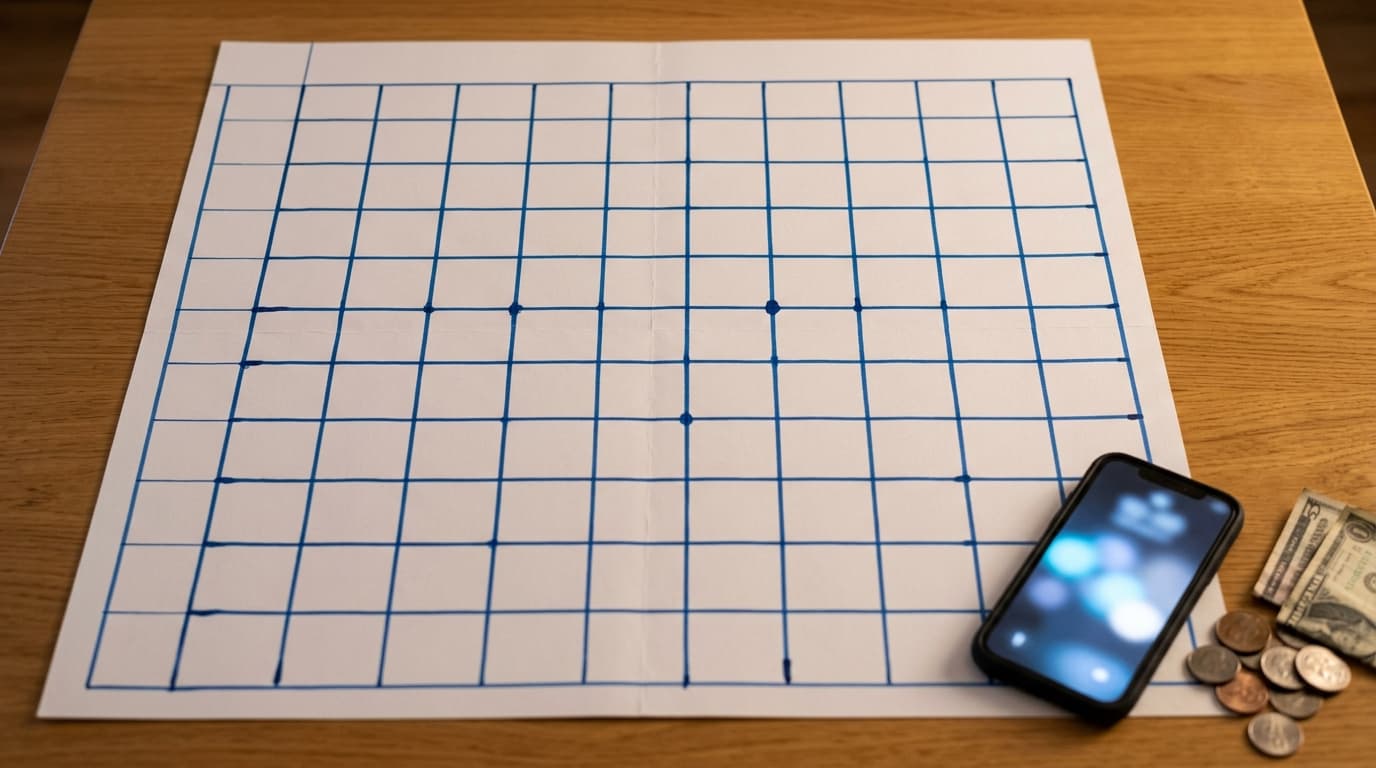
The one habit worth adopting regardless of method: track that a person's payment covers the number of squares they claimed, not which specific square number they own. Squares can still shift between participants right up until numbers are assigned, so tying a payment record to an exact square position just creates a mismatch to untangle later. A simple count per person, kept in one place you update as payments arrive, is enough.
Digital payment apps make this easier since they timestamp every transaction automatically, which is especially useful if you plan to seek a corporate donation match later, as most matching programs want documentation of who gave what. A paper ledger or a cash box still works for a small, informal group, but treat it as the fallback rather than the default, since the moment more than a handful of people are involved, a central digital record saves you from reconciling a stack of cash and handwritten notes after the fact.
On the compliance side, keep the framing simple and honest: this is a squares game played among friends, family, coworkers, or teammates, with a portion of the money going to a stated cause. Keeping it framed that way is exactly what keeps the whole thing fun for everyone playing and safe and simple to run. The rules genuinely do vary by state and by how public your fundraiser gets, so a small pool among coworkers raising money for a colleague carries very different considerations than a squares board promoted publicly on behalf of a registered nonprofit with corporate matching involved. If you are raising money on behalf of an established charity, loop in that organization before you launch the board, since they may have their own rules about how the money needs to be collected and reported.
Don't feel pressure to cut off sign-ups a set number of days before kickoff. In practice, plenty of Super Bowl squares boards keep filling right up until kickoff, and some groups still have a square or two open once the game has already started. What actually matters is finishing the job before you randomize the numbers: every square sold and every payment collected, no exceptions, since that random assignment is the real point of no return. Once the numbers are drawn, the board locks. Nobody joins after that, and no squares can change, because every square only has an equal shot at winning before the numbers are assigned. Once the draw happens, letting someone claim a square or swap into one means they are picking a winner after the fact instead of taking their chances with everyone else, which is not fair to the people who bought in before the draw. After the final score is set, pay winners within a day or two while the game is still fresh, note who collected each prize in the same record you used to track payments, and share a final total raised with your group so everyone sees what their squares actually accomplished.
Frequently Asked Questions
How much should you charge per square for a Super Bowl squares fundraiser?
How do you split payouts across the four quarters?
What happens if a Super Bowl squares fundraiser doesn't sell out before kickoff?
Do you need nonprofit status to run a Super Bowl squares fundraiser?
How is a Super Bowl squares fundraiser different from a regular squares pool?
Is a Super Bowl squares fundraiser legal?
Ready to Set Up Your Board?
Play Squares handles the grid, the number assignment, payment tracking, and live scoring through every quarter, so your fundraiser runs itself once the board sells out.