How to Run a March Madness Squares Fundraiser
Squares School10 min read · July 21, 2026
A March Madness squares fundraiser runs on one 10 by 10 board that covers the whole tournament, with one collection and one number draw for every game from the First Round through the Championship. You set a price per square from your fundraising goal, keep a share of what gets collected for the cause, and pay a fixed prize for every game in a round, increasing that amount as the rounds go on, which gives every supporter a reason to watch three weeks of games with almost no work once the board fills.
Squares also has one practical edge over a bracket fundraiser, because it doesn't need the bracket, so you can sell the board for weeks before Selection Sunday instead of squeezing every sale into the few days between the bracket reveal and tip-off. Below is that sales window, a pricing method tied to your actual goal, the axis rule a neutral-court tournament needs, and a six-round payout table you can copy straight onto the board.
What Is a March Madness Squares Fundraiser?
A March Madness squares fundraiser is a squares pool run to raise money for a cause, using the NCAA tournament to decide the winners. A portion of every dollar collected goes to the cause before anything gets paid out, and that one decision, how much stays with the cause versus how much goes back to players as prizes, shapes the pricing and the payouts that follow.
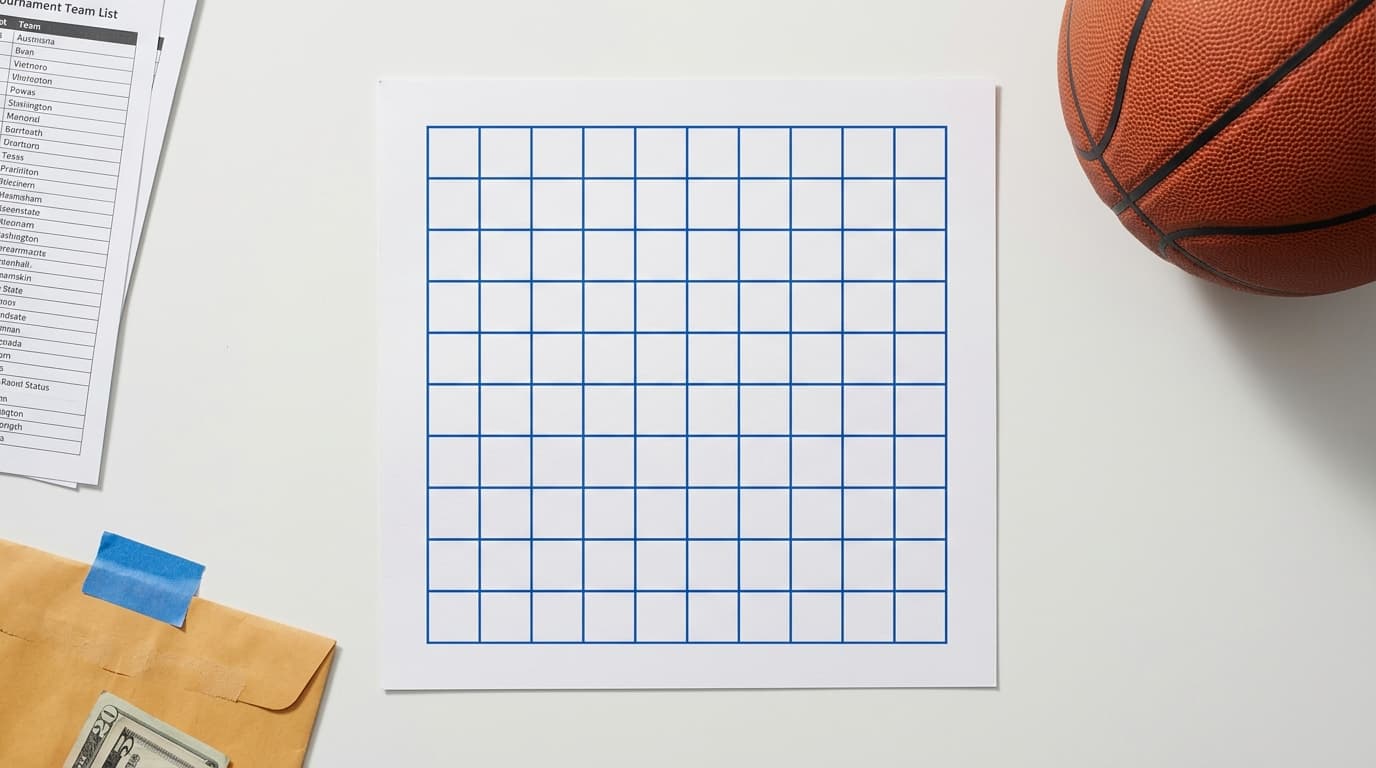
Youth sports teams and people raising money for a charity or a cause reach for it most often, plenty of workplaces run one every March too, and schools and community groups come to it a little less often. A youth team already has a group of people who care about sports, so a board turns something they enjoy into money for travel and gear, while someone fundraising for a charity treats the tournament as one more chance on the calendar to bring supporters in. Nobody needs to follow college basketball to take part, since a coworker who has never watched a game holds exactly the same chance as the office's biggest fan, and that's a big part of why a squares board sells faster in a mixed group than a bracket pool.
Everything here works on paper or online with Play Squares, though three weeks is a long time to be the only person who knows what the grid says. On an online board the grid updates while a game is still being played and highlights the square on track to take that prize if the score holds, so a hundred supporters can check for themselves instead of texting you during the Sweet Sixteen. Our March Madness squares page covers that version, our Super Bowl squares page covers a fundraiser built around one marquee game, and if your supporters follow football more closely, our football squares fundraiser page sets the same thing up around an NFL game instead.
How Do March Madness Squares Actually Work?
March Madness squares work by giving every participant one or more boxes on a 10 by 10 grid, then randomly assigning the digits 0 through 9 to each row and each column once the board sells out. Every box then stands for one pairing of last score digits, one from each team in whichever game is being settled.
The tournament is played on neutral courts, so there is no home team to put along the top, and that's the one setup call that separates a tournament board from a Super Bowl board. Label your axes winning team across the top and losing team down the left side so a single board resolves cleanly for all 63 games from the First Round on, no matter who is playing. Labelling by seed, with the better seed along the top, works too and some groups prefer it, but pick one before you sell a square and print it on the board, because switching partway through the tournament changes who wins.
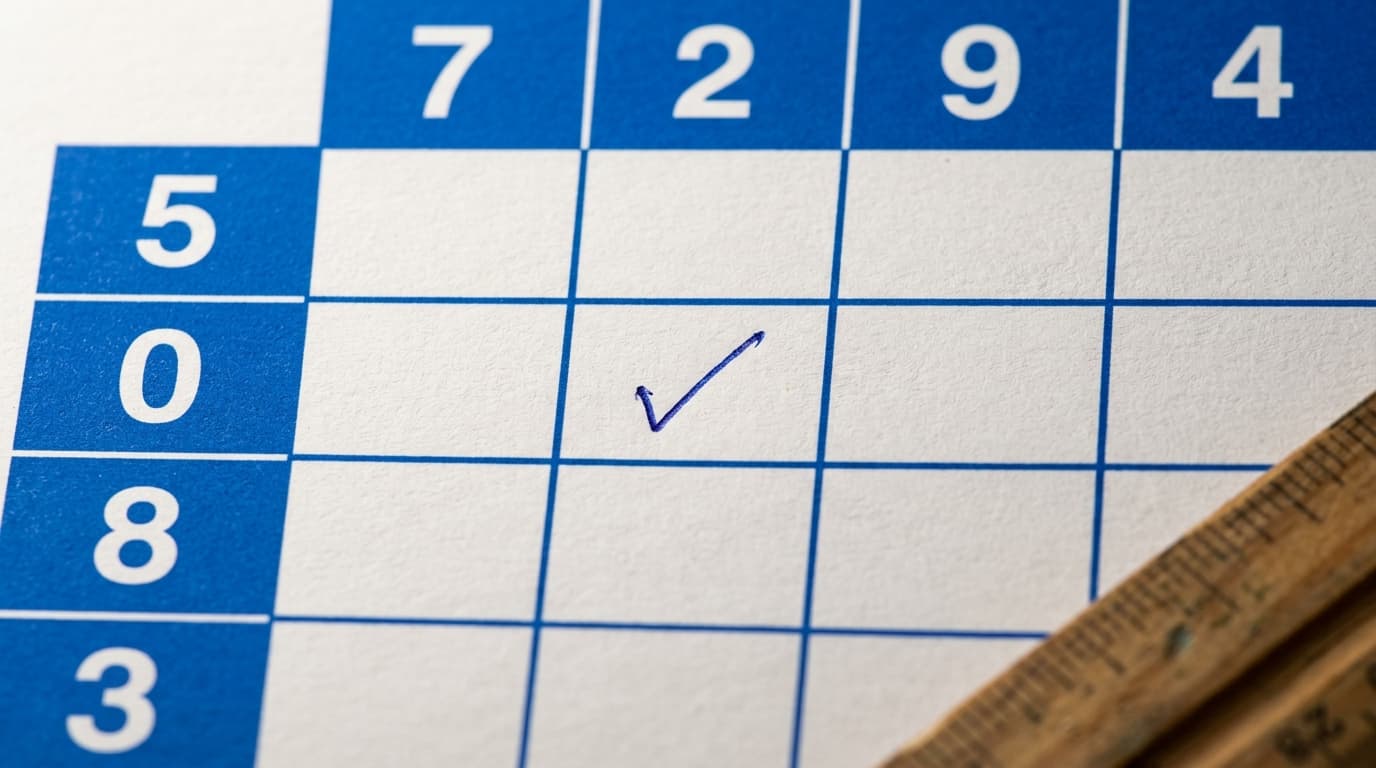
At the end of a scoring period, which in basketball means a half or a full game, you take the last digit of each team's score and find where those two digits cross on the grid, and whoever owns that box wins. A game that goes to overtime settles on the official final score with the overtime included rather than the score at the end of regulation, which is worth writing on the board because tournament games do go to an extra five minutes. Across 63 games a square winning twice is close to inevitable, and the simplest answer is to let it happen and pay that square again.
The numbers get randomized only after every square is sold and paid for, since the board is fair precisely because every square was claimed while its digits were still unknown. Nobody ever picks their own numbers, claiming a square early buys no advantage, and once the digits are drawn the board locks with no new entries, swaps or changed claims. If you've never run a squares pool of any kind before, the Ultimate Guide to Hosting a Football Squares Pool covers the full hosting process, and almost all of it carries over directly to basketball.
From 2027 the tournament opens with a 12-game Opening Round, which replaces the old four-game First Four now that the NCAA has expanded the field from 68 teams to 76. We'd skip those games and start the board with the First Round, where the 64 teams left play exactly 63 games to a champion. Nobody gets knocked out of a squares pool the way a team gets knocked out of the bracket, so a supporter who claimed one box still has a live rooting interest in the Championship three weeks later.
How Much Should You Charge Per Square?
Charge a price that fills the board and gets you to your goal. Illustrative starting points are $5, $10, $25 or $50 a square, but the right number comes out of your own goal and your own audience, so a youth sports team covering a travel bill and a charity running a headline campaign can use the same 100-square board at very different prices and both be doing it right.
Work backward from your goal, and get the divisor right. Your goal is almost always the amount you want the cause to end up with, not the amount you want to collect, and on the common half-for-the-cause split you have to collect twice your goal to get there. So on a 100-square board you divide the goal by 50, not by 100. A team that wants $1,500 for the season needs $3,000 through the board, which is $30 a square, while dividing by 100 would have priced it at $15 and left the season half short. If your split isn't 50/50, adjust the divisor to match, so keeping 70 percent for the cause means dividing the goal by 70.
Then sanity-check that price against the actual room. A bigger group can generally carry a higher price, since each person only needs a square or two to fill the board and there's more total budget in play, while a smaller group needs each person to claim several squares and a gentler price gives them room to do it. Balance the two against each other rather than maximizing one, because a higher price raises more once the board fills but a board that never fills raises nothing at all.
Here is how the numbers scale at three illustrative price points, assuming you keep half for the cause and pay the other half out in prizes.
| Price per square | Collected | For the cause | Prizes |
|---|---|---|---|
| $1 | $100 | $50 | $50 |
| $10 | $1,000 | $500 | $500 |
| $25 | $2,500 | $1,250 | $1,250 |
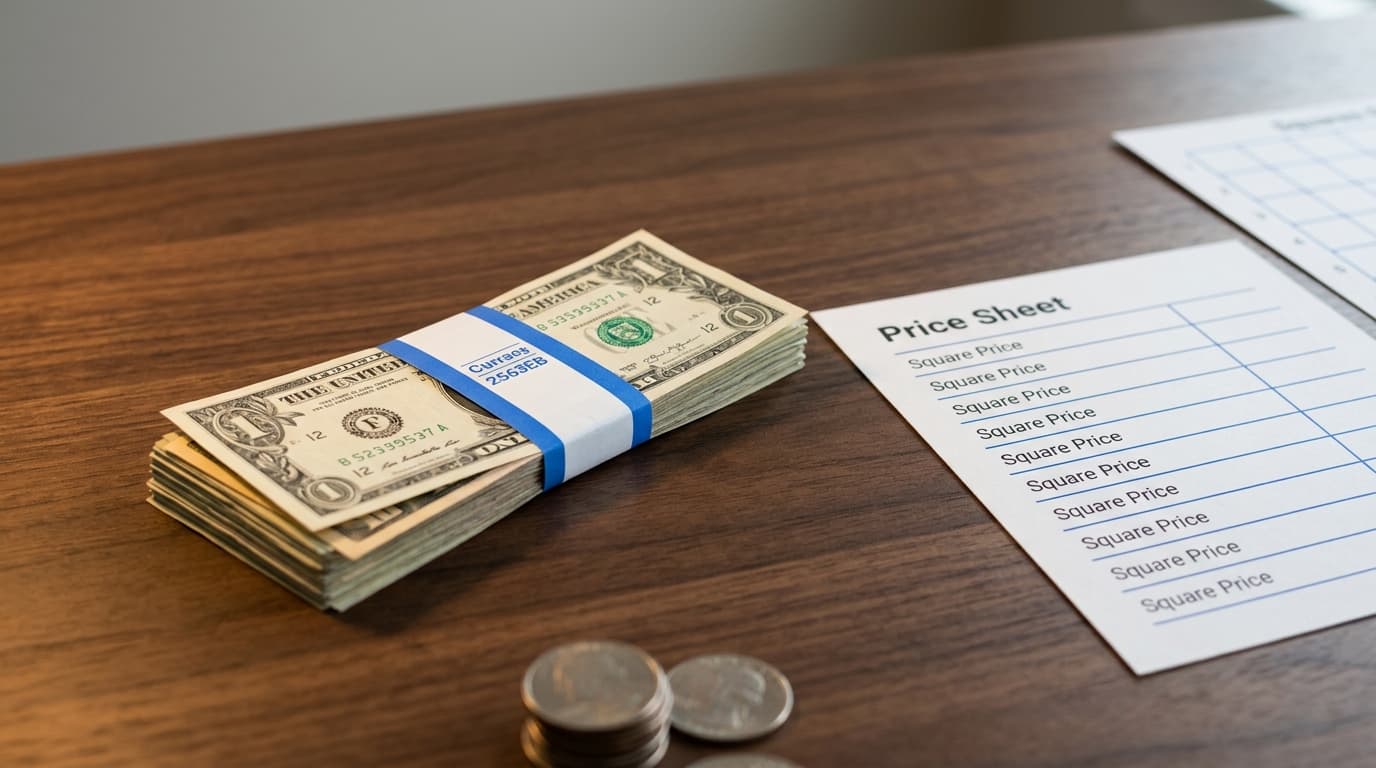
The 50/50 split is one example rather than a rule, since keeping 70 percent treats the prizes as a thank-you for playing and keeping 30 percent leans on a bigger prize pool to sell the board faster, so decide it before you sell a single square and put it in writing. A supporter is also buying 63 games and three weeks of chances rather than one afternoon, which is why a tournament board usually justifies a higher price per square than a single-game board would.
How Do You Split Payouts Across the Tournament?
You split payouts across the tournament by running one board for every game from the First Round through the Championship, with a fixed prize for each game within a round that increases as the rounds go on. One collection and one number draw happen once before the First Round tips off, and every game pays out against that same board, so there's never a reason to run separate boards per game or per day.
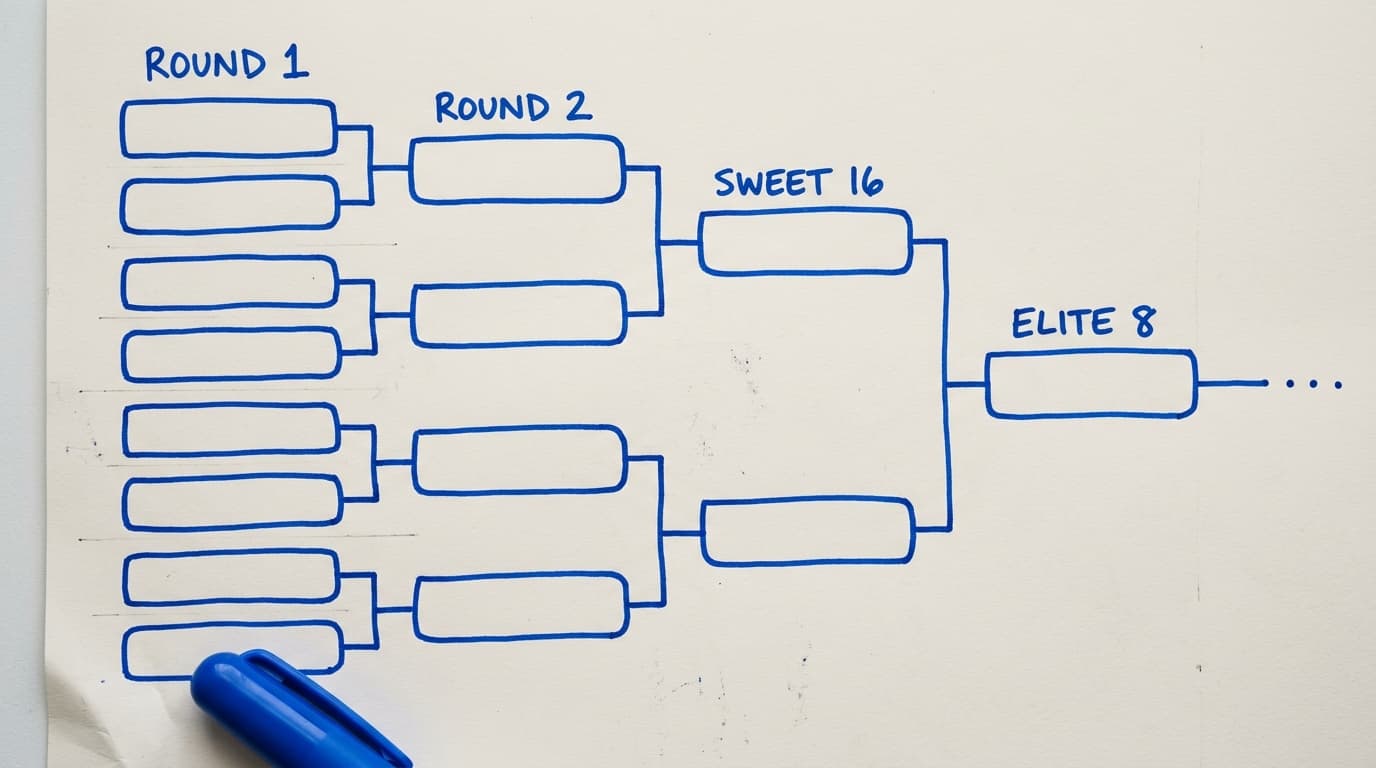
Every game within the same round pays the identical amount, and that amount goes up round over round as the field narrows. The First Round has 32 games, so each one pays a modest amount, and the Championship is a single game, so it pays the most. Early rounds typically pay on the final score only, and as the tournament progresses many hosts add a halftime prize, with the latest rounds often applying the reverse score rule to both, paying whoever holds the same two digits the other way round. Those reverse prizes sit well below the straight ones at the same stage, since they work as a bonus alongside the main prize rather than in place of it.
Here's a tangible example on a board charging $25 a square with half kept for the cause, leaving a $1,250 prize pool to spread across the tournament.
| Round | Games | Prizes per game | Round total |
|---|---|---|---|
| First Round | 32 | $5 final | $160 |
| Round of 32 | 16 | $10 final | $160 |
| Sweet Sixteen | 8 | $15 final, $5 halftime | $160 |
| Elite Eight | 4 | $25 final, $15 halftime | $160 |
| Final Four | 2 | $75 final, $25 halftime, $15 reverse final, $5 reverse halftime | $240 |
| Championship | 1 | $240 final, $75 halftime, $40 reverse final, $15 reverse halftime | $370 |
The round totals add up to exactly $1,250, the full prize pool this example started with, and the reverse prizes stay well below the straight ones even in the Championship. Scale every figure up or down to match your own square price and cause split, and keep the shape, which is small and final-score-only early, then bigger and multi-scored late.
Whatever numbers you land on, agree the whole structure before the First Round tips off, write it somewhere every participant can see, and leave it alone once squares are sold. If six rounds of halftime and reverse prizes is more than you want to manage on a first attempt, pay on the final score only in every round and keep the same one-board, increasing-prize shape.
When Do You Sell the Squares, and How Do You Collect the Money?
Sell the board early, and keep one central record of who has paid. A squares board doesn't depend on which teams make the field, since the axes read winning team and losing team rather than team names, so you can open sales two or three weeks before Selection Sunday and close them just before the first game you pay on. A bracket fundraiser can't do that, because nobody can fill in a bracket until it's revealed, which leaves only the four days between Selection Sunday and the First Round to collect every entry.
Filling the board is mostly a matter of asking people directly. Ask every player, parent or volunteer to bring in a few buyers from their own circle, share the board wherever your supporters already talk, whether that's the team group chat, a newsletter or a workplace channel, and set a clear closing date so nobody leaves it to the last evening. Telling people how many squares are left every few days works better than any flyer, because a nearly full board tends to sell its last few squares on its own.
Whoever does the selling, one named person should own the payment record and update it the moment each payment lands, tracking how many squares each person's payment covers rather than which square they hold, since claims can still shift until the numbers are drawn. A digital system like Play Squares keeps that record in one place instead of a paper log, and payment apps timestamp every transaction, which helps if you plan to ask an employer to match the total later.
On the compliance side, the rules genuinely vary by state and by how formal the fundraiser is, so check what your own state allows before you collect anything. A small pool among coworkers supporting a colleague's medical bills sits somewhere very different from a board run publicly for a registered nonprofit, and if you're raising money on behalf of an established charity, loop that organization in before you launch, since they may have their own rules about how money gets collected and reported.
Frequently Asked Questions
How much should we charge per square for a March Madness squares fundraiser?
How do you split payouts across a March Madness squares fundraiser?
Do you need nonprofit status to run a March Madness squares fundraiser?
Can a company match donations raised through a March Madness squares fundraiser?
What happens if a March Madness squares fundraiser doesn't sell out?
How many rounds does a March Madness squares pool run through?
Which team goes on which axis, and do overtime scores count?
Is running a March Madness squares fundraiser considered gambling?
Ready to Set Up Your Board?
Play Squares handles the grid, the number assignment, payment tracking, and live scoring across every round of the tournament, so your fundraiser runs itself once the board sells out.